
by Mike James
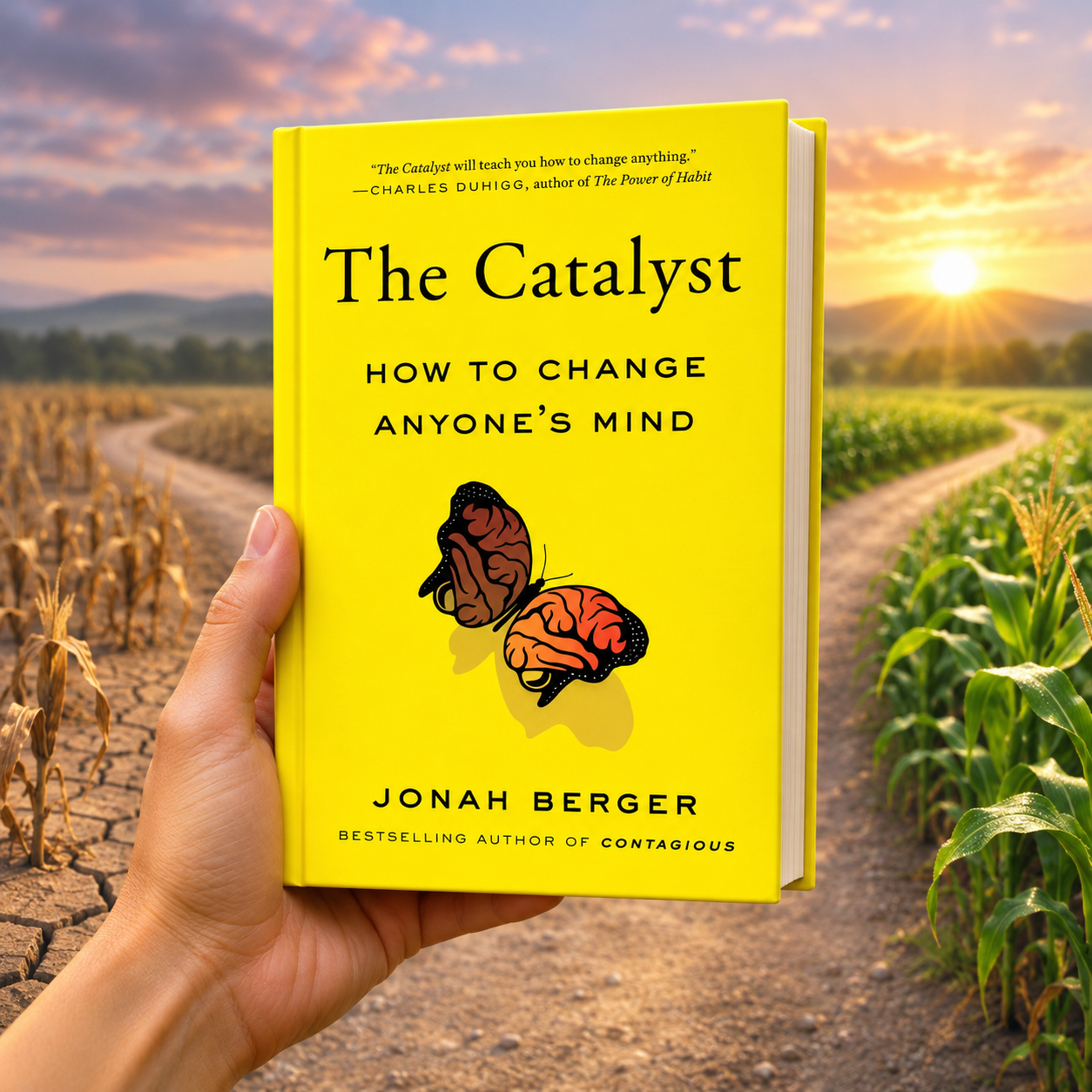
I have recently been studying a book by Jonah Berger titled The Catalyst. The book addresses why change is so difficult for humans. One chapter addresses "uncertainty" as yet another reason it is so difficult for humans to change. Let me explain what he means.
Scientists have run hundreds of experiments on the idea that when people are given a choice between a sure good thing and an uncertain better thing, they most often choose the sure good thing. The reason is that we are, for the most part, risk-averse.
Let me give you a specific example. In the early 2000s, University of Chicago researchers asked people how much they would pay for a $50 gift card that had to be used within two weeks at a local retailer. Most offered to pay $26 for the card because of the two-week limit, and some were not regular shoppers at the retailer.
A second group was asked how much they would pay for a $100 gift card with the same retailer. This group came to an average of $46. This all seems to fit a pattern.
But what surprised the researchers was the third group they used in the study. With this group the researchers added a sense of uncertainty. The third group was offered a lottery ticket with a fifty-fifty shot—a 50 percent chance of winning a $50 gift card and a 50 percent chance of winning a $100 gift card. Now remember, in reading this, we know all the parameters of each of these experiments. The participants only knew the conditions of their own experiment. You would think that this group would pay a higher price for the ticket knowing they were going to get at least a $50 gift card. But that is not what happened.
The average amount this group was willing to pay for this 50/50 shot was only $16! Due to this and other similar research, we know the reason is the uncertainty. People bidding on the first two gift cards knew exactly what they would receive. But in the lottery example, there was a sense of uncertainty, which leads most people to risk even less.
Change always involves some element of uncertainty. Bringing this into the spiritual realm, think about someone changing their religion. Why don't most people commit to Christianity if it is guaranteeing you eternal life? Well, because with so many other religions and philosophies out there, most people are not sure about the promises of their own religion, let alone a different religion, say, for a Hindu or a Buddhist.
Uncertainty is one reason why most people do not change their religion.
Now another interesting point made in this chapter of the book dealt with the idea of "trialability." Let me explain this to help us understand what can help overcome the uncertainty principle when it comes to change.
A man named Everett Rogers, who lived on a farm in Iowa, attended Iowa State University and studied agriculture. Rogers was learning new techniques that his dad was hesitant to try on the family farm. One of the ideas was hybrid corn seed, which was bred to be drought-resistant and would provide a 25 percent higher crop yield. Eventually Iowa farmers began to use the hybrid seeds, but it took about 13 years to get the change going. Even then, it took another 10 years for them to use it for all their crop. The reasons for this were studied.
Rogers eventually got a PhD. and was fascinated by the hybrid corn study, and he decided to do a similar study on weed spray use. While beginning this research, he found other research in other disciplines on the spread of new education programs or the success of new drugs. Rogers expanded his study from aspects of farming to innovations in many different things.
Years later, Rogers wrote a book about this titled Diffusion of Innovations, which is the second most cited social science book, referenced almost 100,000 times in everything from marketing and management to engineering, economics, and energy policy. In the book, he argues that up to 87 percent of the variance in why things get adopted can be explained by five attributes. The most important of these five reasons is "trialability."
Trialability means how easy it is to try something. Or how easy something can be tested or experimented with on a limited basis. Some things are easy to try, like a new drink or candy bar. They are inexpensive, and many times free samples are provided. But trying a new hybrid corn seed when your farm depends on the crop is a whole different animal.
I suggest the same thing is true of your religion or belief system. When I left the Orthodox Church, it was a big deal for me. All my family connections and many friends were wrapped up in that Church. It was not an easy decision, and it took me about four years to make the leap.

Uncertainty can make change difficult. But what if people had the chance to experience a better way of life for themselves? The Bible’s promise of a future resurrection offers a hopeful answer.
So that brings me to the second resurrection. Think about how trialability will be used by God there. Most humans since the time of Christ have not changed their religion. Why? Because of the familial and cultural connections which are very difficult to overcome, but also because of uncertainty. Most people are too busy with their lives to really study all the details of other religions. They have no certainty that Christianity will give them anything better than their present religion.
During the second resurrection (Revelation 20:5-6), the rest of the dead will come back to physical life and be confronted with trialability. They will first realize someone has given them life again, and the world will be dramatically changed. Living at that time and learning what they will learn will be the perfect trial for them to make an easier decision to choose Christ. Not everyone, of course (Revelation 20:8), but I think that trialability will certainly overcome the uncertainty problem.
Sources: The Catalyst, Jonah Berger, New York: Simon &Shuster, 2020