
Overcoming the Status Quo
by Mike James
One of the hardest things we can do as humans is change. This has a spiritual component because, as Christians, we are told we must repent (change) and begin to walk a new path when we decide to have a relationship with Jesus Christ.
In the past, I have mentioned the book Catalyst by Jonah Berger in relation to the methodology he writes about in how we can change. He is not looking at the subject from a Christian perspective, but in reading his book it is easy to see the parallels between what he has discovered and how God uses the same methods to get us to change.
I have written about “reactance” in a previous blog, but this time we are going to explore what Berger describes as “endowment”—in other words, overcoming the “status quo” to make change happen.
Berger addresses the difficulty in change, which can be due to our tendency to overvalue what we already have or what we already do. For example, you may get a better deal with a cable company or satellite TV company for your TV stations, but if you are only going to have your bill reduced by about $10, it is probably not enough value for many to make the change. Berger provides some statistics that prove we won’t change the status quo unless we gain a lot more value, not just a little more.
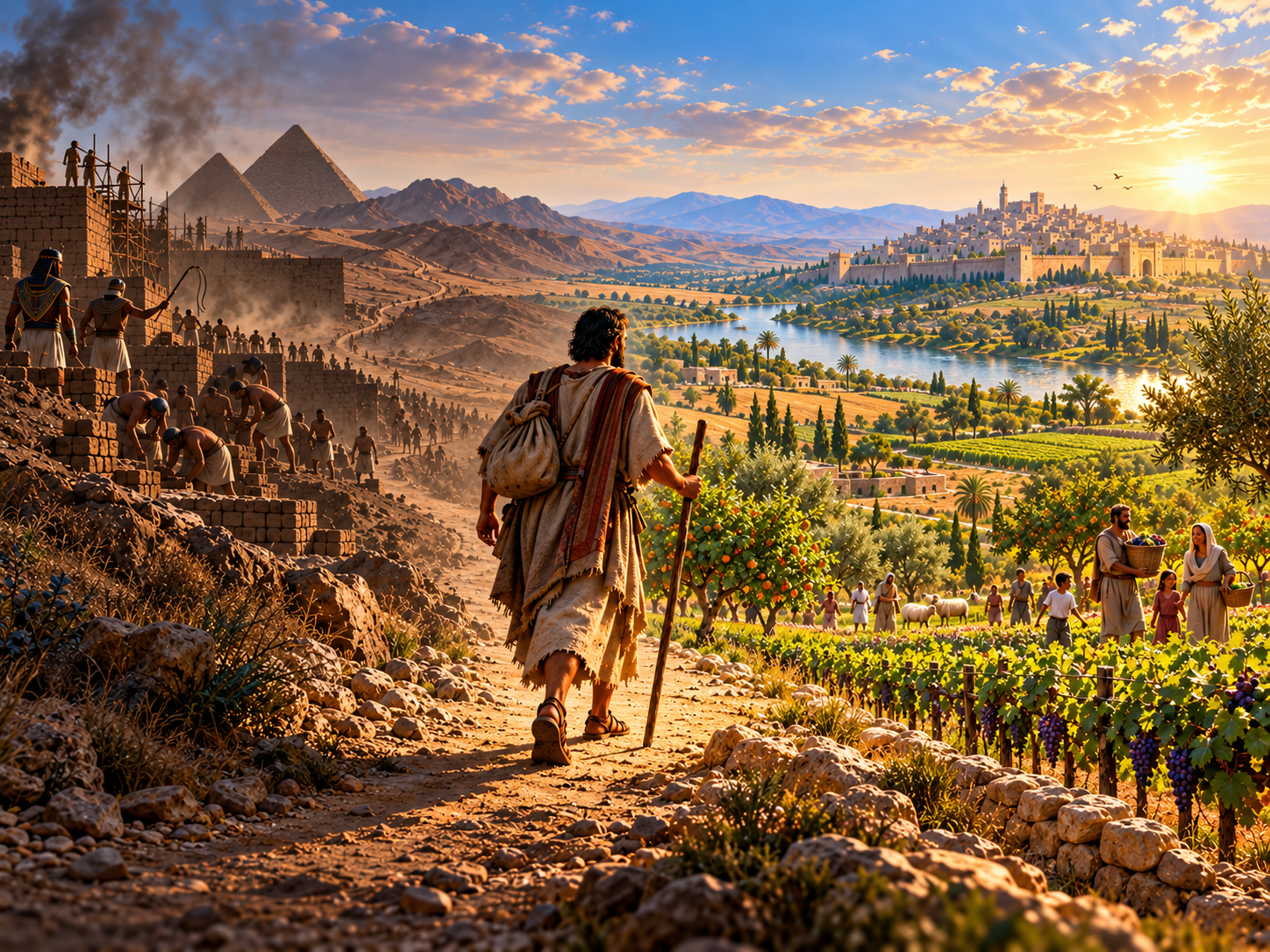
Leaving the familiar can be difficult, but God’s promised future gives us reason to move forward.
When we look at the Bible, we see examples like this. Think back to Israel escaping from Egypt and no longer having to be slaves. But very soon after their escape, they begin to complain about the difficulty of their life in the wilderness (Numbers 14:3-4). They argue that at least in Egypt they had regular food to eat on a normal basis (Numbers 11:4-6; Exodus 16:2-3). Quickly, they are ready to return to their former state or the status quo rather than hope for a new beginning and a different future.
When we begin to think about this idea in relation to the plan of salvation, some interesting ideas come to the fore. Think about why the Millennium may need to last so long (1,000 years) rather than only 100 or 200 years. Keeping in mind the idea of the “status quo” holding our attention, maybe God is using all that time to really solidify the concept of the millennial reign as the status quo. Flesh and blood humans alive during this golden age on earth will have an easier decision to follow Christ because Satan will be out of the picture, and all the positive things in the world (Micah 4:3; Isaiah 51:3) will have a way of cementing in their minds the new status quo. They will like it the way it is and want more of it.
This will also be experienced by people who come to life after the Millennium in the second resurrection (Revelation 20:4-6). The world these people will be resurrected into will be much different from the world they experienced their first death in. Again, I believe most people who experience this change will compare it to what they formerly experienced in life and want more of the new experience. This will lead to a greater volume of people choosing Christ than would have prior to the Second Coming of Christ. God may have planned all this out, knowing what He knows about what motivates mankind to make change in their lives.
The second resurrection and the millennial will also help motivate people because at that time everyone will know God is REAL!!! There will be no doubt about it anymore because Christ will be ruling on earth at that time. Yes, Satan will be back in the picture during the judgment period (Revelation 20:8), but knowing what the choices are will help most people make the right decision.
To bring this point home a little better, I want to address a story Berger used in his book to address the need for a dramatic situation to sometimes help lead people to make a choice. Like the judgment period, the destruction of the old world will be needed to set up the conditions for most people to more easily make the right decision. Berger related the story of the Spaniard Hernán Cortés burning his boats to force his men to press on into the Mexican heartland when many wanted to return to the island of Hispaniola (now Haiti/Dominican Republic).
Cortés had been having disagreements with the Spanish governor of Hispaniola prior to embarking on a journey to the Yucatan peninsula. Cortés wanted to go further inland and see if he could find a city that had vast riches. Some of his men wanted to return home and follow the governor’s orders. So, Cortés took the dramatic step of burning his boats to force his men to follow him into the inland city. God is going to force the decision-making process of those who have not accepted Christ by resurrecting them and physically showing them and teaching them how much better life can be in relationship with Christ.
Another idea we can glean from this blog is using the gift of eternal life as a tool to help us in our personal evangelism with others. Knowing eternal life is a gift and reward from Christ when we choose Him can help be an incentive to others to let go of the status quo. Remember what we said earlier—people change when they see there is a greater reward involved than maintaining the status quo.
Sources: The Catalyst: How to Change Anyone’s Mind, Jonah Berger (New York: Simon & Shuster, 2020).