
Changes in Germany
by Mike James
In the past month, Germans voted in three regional contests. In all three states, the far-right Alternative for Germany party (AfD) made big gains.
The AfD actually won the election in Saxony-Anhalt, a former East German state of around two million people.
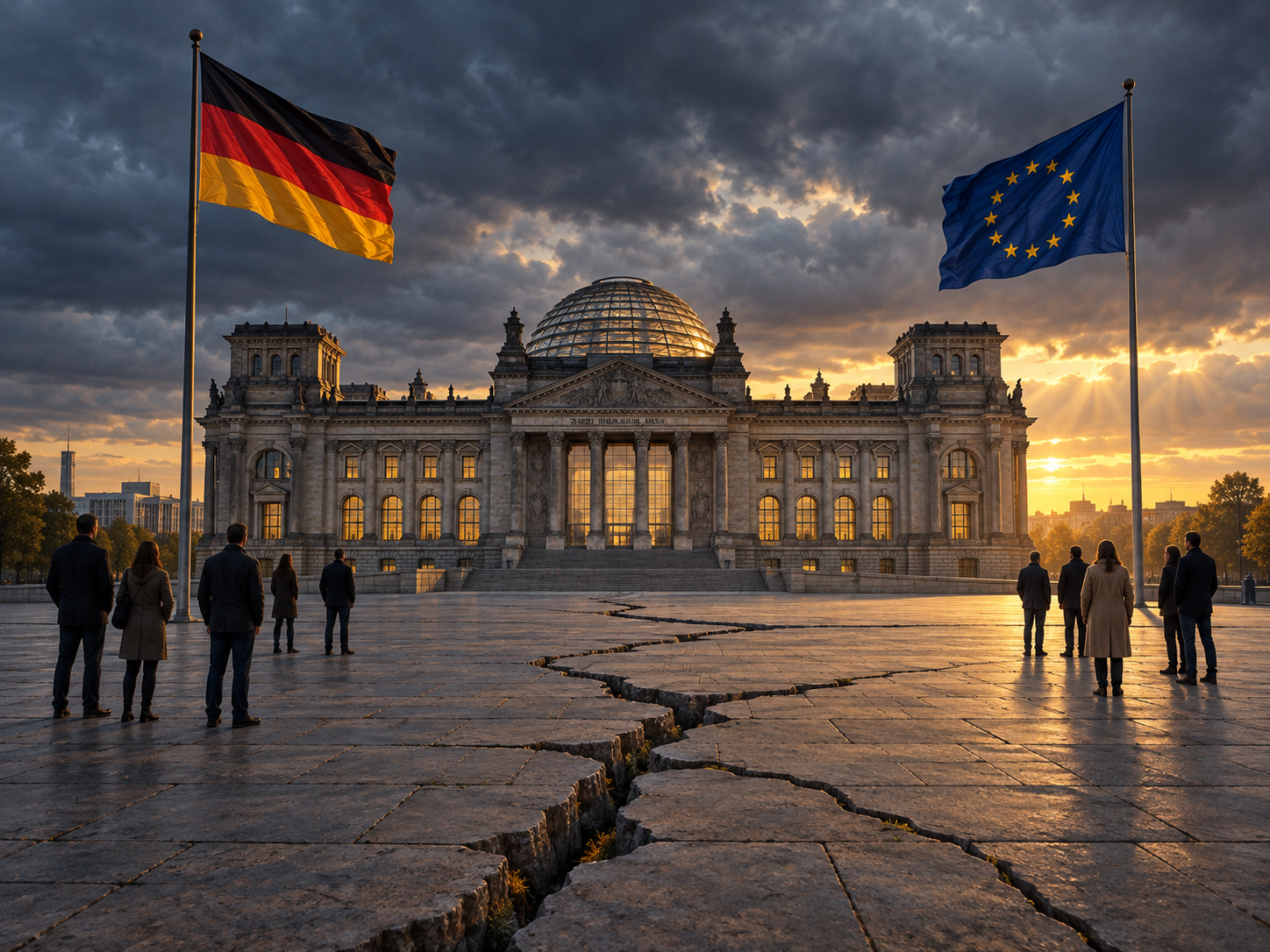
Germany’s shifting political landscape raises questions about national identity, European unity, and the continent’s future.
The final vote count in Saxony-Anhalt showed a dominant AfD performance, but no guarantee it will govern. The party won just under 44 percent of the vote amid record turnout, and 39 seats in an 83-seat Parliament. Even though it is a small state in the result impacted German politics and shook the concept of a firewall—at a time when the AfD leads national polls.
In 2024 the AfD had begun to rival the other major political parties in Germany in opinion polls, but its political power remained limited because other parties refused to form coalitions with it. Even after the AfD finished second in the February 2025 snap general election, the mainstream parties maintained the post-World War II Brandmauer (“firewall”) that prohibited cooperation with parties deemed to be extremist.
The recent results “demonstrate the abject failure of the firewall,” said Thorsten Benner, director of the nonprofit Global Public Policy Institute in Berlin. “It has allowed the AfD to gather ever more voters as the most credible alternative to the ‘system’ that is seen as banding together with the only purpose of excluding the AfD.”
Roger Stöcker, a political scientist at Otto von Guericke University in Magdeburg, called it “a historic turning point.”
The AfD is much more extreme than other European far-right parties that either are already in power, like Giorgia Meloni’s Brothers of Italy, or could be soon, like Marine Le Pen’s National Rally in France. The parties in Italy and France have moderated themselves a little, but the AfD has become more radical over time by continuing ties with neo-Nazis and promising to repatriate migrants.
The AfD’s platform pledged to influence artistic institutions to celebrate prewar German history, break from the influences of multiculturalism, and end Germany’s “guilt complex” about the country’s Nazi past. The AfD is pushing a much more nationalistic perspective.
AfD support in Saxony-Anhalt is due to a mistrust of democracy and opposition to the influx of immigrants that Germany has experienced since 2015, said Marcel Lewandowsky, a political scientist at Martin Luther University Halle-Wittenberg in Halle, the state’s second-largest city.
Nicolas Spohn, a political scientist at Otto von Guericke University in Magdeburg, said many AfD supporters tell him they back the party because it has never been in power.
The sentiment, he said, is: “Everything we’ve experienced so far hasn’t worked out the way we imagined it would. We’re disappointed, so let’s let someone who’s never been in this position give it a try.”
Leading figures within the AfD have repeatedly described the center right conservative Christian Democrats (CDU) “destruction” as a political objective. Torben Braga, a prominent lawyer, party strategist, and AfD member of parliament, made the party’s confrontational stance toward its political rivals clear during a panel discussion organized by the far-right publishing house Antaios.
According to Braga, the AfD’s goal is to become strong enough either to govern on its own or to trigger a massive upheaval within competing parties so that they are transformed into entirely new political forces.
The AfD hopes for the CDU’s gradual decline, focusing on attracting disillusioned CDU conservative voters rather than working with the party.
As I have always said, change is slow (usually), but the gradual continued rise of a once obscure right-wing party in Germany is very reminiscent of the rise of another once obscure party in Germany about 100 years ago. The other interesting thing about this is the rise of other right-wing parties in other parts of Europe at the same time.
Why is this all happening now?
“We live in a world today of fragmentation and growing inequality, no longer with unifying themes or a unifying narrative,” said Mohamed A. El-Erian, an economist at the Wharton School, University of Pennsylvania.
This leads to a sense of insecurity according to some analysts. Some people want to go back to their past and what they know. Where life was simpler, family seemed more defined and Western nations were largely Christian and less diverse.
The AfD still has a long way to go before they dominate German politics nationally, but that possibility was a pipe dream in 2013 when the party started. The pipe dream is not so preposterous anymore.
Could Germany once again rise to dominate a resurgent Europe? Will the Beast power of the future relate to the mysterious King of the North in the book of Daniel? Could Europe and the papacy relate to the end-time scenario?
I don’t know. The future will answer all these questions.
Sources:
“Something Alarming Is About to Happen in Germany,” by Hans Kundnani, The New York Times, September 4, 2026
“German Far-Right Surges, in Threat to Postwar Taboo on Extremists in Power,” by Jim Tankersley, Tatiana Firsova and Christopher F. Schuetze, The New York Times, September 5, 2026
“Germany’s ‘Firewall’ Against the Far Right Is Being Tested as Never Before,” by Jim Tankersley, The New York Times, September 7, 2026
“'No compromises': Far-right AfD has few potential partners,” by Hans Pfeifer, Deutsche Welle (DW), September 18, 2026,https://www.dw.com/en/german-dar-right-afd-surges-but-shuns-compromises-needed-to-govern/a-79326208
“Alternative for Germany,” Britannica, https://www.britannica.com/topic/Alternative-for-Germany
“Close to Power, German Far Right Takes Aim at Theaters and Arts,” by Jim Tankersley and Sam Gurwitt, The New York Times, September 18, 2026
“Germans Are in Shock. But We Can Get Out of This Mess,” by Anna Sauerbrey, The New York Times, September 21, 2026
“The Fuel That Feeds Europe’s Far Right: Nostalgia and Lost Pride,” by Steven Erlanger, The New York Times, September 21, 2026